

Navigating the complexities of probate and estate administration in Victoria can feel overwhelming, particularly during a time of grief. This guide is designed to provide a clear, compassionate overview of the process, helping you understand your responsibilities as an executor and the support a probate lawyer can provide. It is a final act of stewardship for a loved one’s legacy, and having professional guidance ensures it is handled with care and precision.
Understanding Probate and Its Role in Estate Administration
When a person passes away, their assets, such as bank accounts, property, and investments, form their ‘estate’. Before these assets can be distributed to the beneficiaries named in the Will, the executor must often obtain a legal document known as a Grant of Probate. This document is the official seal of approval from the Supreme Court of Victoria, confirming that the Will is valid and that the executor has the legal authority to manage the estate.
Without this grant, financial institutions and the land titles office will not release the deceased's assets. It acts as a crucial safeguard, ensuring that the estate is administered correctly and according to the deceased's final wishes. The executor is the legal steward of these wishes, and the Grant of Probate is the tool that empowers them to fulfil this important duty.
The Difference Between Probate and Letters of Administration
While often discussed together, Probate and Letters of Administration apply in different circumstances. A Grant of Probate is sought when the deceased left a valid Will appointing an executor. However, if a person dies without a Will (known as dying ‘intestate’), the process is different. In this case, an eligible person, typically the next of kin, must apply to the Court for ‘Letters of Administration’. This grant gives them the authority to distribute the estate according to a formula set out by Victorian law.
Why Probate is a Necessary Safeguard
The probate process is more than just paperwork; it is a fundamental protection for everyone involved. By validating the final version of a Will, the Supreme Court of Victoria prevents fraudulent claims against an estate. It also provides legal protection to the executor. Once the grant is issued and the proper timelines are observed, an executor can confidently pay the estate’s debts and distribute the remaining assets to beneficiaries, knowing they are acting with the full authority of the Court.
The Step-by-Step Probate Process in Victoria: From Application to Distribution
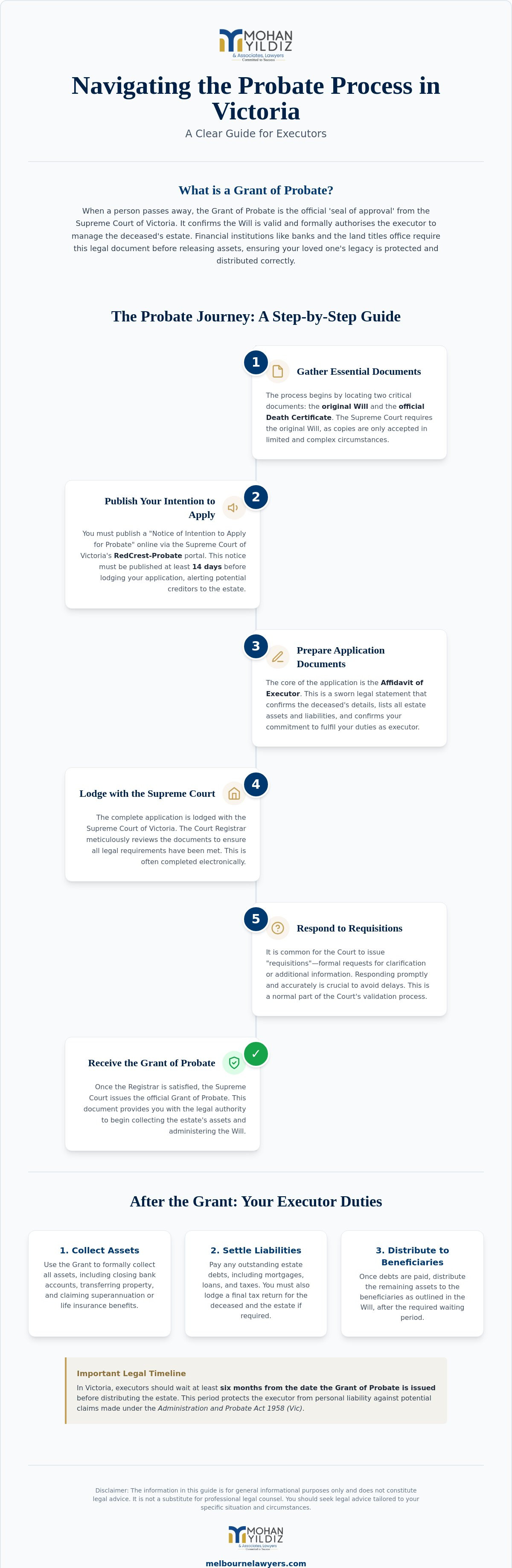
The journey from a loved one's passing to the final distribution of their estate follows a structured legal path. A probate lawyer can manage these steps on your behalf, ensuring compliance with the requirements of the Supreme Court of Victoria.
- Locating the Will and Death Certificate: The first step is to find the original copy of the deceased’s last Will and obtain an official death certificate. These are the foundational documents for the entire application.
- Publishing a Notice of Intention: Before applying for probate in Victoria, you must advertise your intention to do so. This is done online through the Supreme Court's RedCrest-Probate portal. The notice alerts potential creditors or other interested parties, giving them an opportunity to make a claim against the estate. The application cannot be filed until at least 14 days after the notice is published.
- Preparing the Court Application: This is the most technical part of the process. It involves preparing a detailed inventory of the estate's assets and liabilities and drafting an affidavit for the executor to sign. This affidavit is a sworn statement confirming all the information provided to the court is accurate.
- Lodging with the Supreme Court: Once prepared, the application is lodged with the probate office of the Supreme Court of Victoria. The registrar reviews the documents. If they have questions or require further information, they will issue ‘requisitions’, which must be answered before the grant can be issued.
Liaising with Financial Institutions and Entities
A key part of preparing the application is creating a comprehensive inventory of the deceased's assets and liabilities. This involves formally contacting banks, superannuation funds, share registries, utility providers, and government agencies like the Australian Taxation Office. It is important to note that superannuation and life insurance policies often sit 'outside' the estate, as they are typically paid directly to a nominated beneficiary. A lawyer can help clarify how these complex assets should be handled.
Managing Debts and Creditor Claims
An executor has a legal duty to pay all the deceased’s legitimate debts before distributing any assets to beneficiaries. This includes mortgages, credit card debts, and tax liabilities. After publishing the online notice and receiving the Grant of Probate, Victorian law provides specific timeframes to protect executors. Generally, an executor should wait six months from the date of the Grant of Probate before making a final distribution. This period allows any potential claimants or creditors to come forward, protecting the executor from being held personally liable for claims made after the estate has been distributed.
Navigating the Executor’s Responsibilities and Legal Risks
Serving as an executor is a role that carries significant legal responsibility, known as a ‘fiduciary duty’. This is the highest standard of care recognised by law, requiring you to act in the best interests of the estate and its beneficiaries at all times. Understanding the potential risks is crucial for anyone undertaking this role.
- The Risk of "Intermeddling": This occurs when an individual starts dealing with or moving estate assets before a Grant of Probate is issued. Actions like closing bank accounts or transferring property can expose you to personal liability if not done correctly.
- Personal Liability: An executor can be held personally responsible for any losses incurred by the estate due to mismanagement, errors, or failure to pay debts and taxes. Meticulous record-keeping is essential to demonstrate that all duties have been fulfilled correctly.
- The Burden of Transparency: You have a duty to keep all beneficiaries informed and provide a full accounting of the estate’s finances upon request. A lack of clear communication can lead to suspicion and disputes.
Common Pitfalls in DIY Probate Applications
While it is possible to apply for probate without a lawyer, the process is fraught with potential pitfalls. Minor errors in the application paperwork can lead to months of delays as the court issues requisitions. Complex clauses in a Will can be easily misinterpreted, and dealing with 'informal Wills'—such as handwritten notes or unsigned documents—requires a nuanced legal approach. These complications can add significant stress and cost to the process.
Managing Family Dynamics and Potential Disputes
Grief can unfortunately bring out tensions within a family. A probate lawyer can act as a neutral and objective third party, managing communication and ensuring the process remains fair and transparent for all beneficiaries. This is particularly valuable if there is a risk of the Will being challenged. In Victoria, eligible persons (such as a spouse or children) can make a claim for further provision from an estate under Part IV of the Administration and Probate Act 1958 (Vic). Professional guidance is vital in navigating these sensitive and complex disputes.
When to Engage Professional Probate Lawyers for Support
Engaging a lawyer is not just about managing paperwork; it's about gaining peace of mind during a difficult time. Consider seeking professional support if the estate involves complex elements like business interests, multiple properties, or overseas assets. Even for simpler estates, the time commitment required can be significant.
A probate lawyer offloads the technical burden, manages communication with all relevant institutions, and ensures every legal requirement is met. The legal fees for probate are typically paid from the estate’s assets, not from the executor’s personal funds. This makes professional assistance an accessible and logical choice for ensuring the process is handled correctly and efficiently.
Fixed Fees vs. Hourly Rates: Understanding the Costs
Clarity on costs is essential. Many law firms offer different fee structures for Wills and Probate matters. For straightforward applications, a fixed-fee model can provide certainty and transparency. For more complex estates, work may be charged at an hourly rate. An initial consultation with a lawyer will help determine the nature of the work required and provide a clear estimate of the likely costs involved, allowing you to make an informed decision.
The Value of Meticulous Documentation
A professionally drafted probate application significantly reduces the risk of rejection or delay by the court. Lawyers are meticulous in their preparation of documents, ensuring that the final distribution of the estate is legally sound and protected from future claims. The cost of professional guidance is an investment in mitigating the significant personal and financial risks that can arise from errors in estate administration.
How Mohan Yildiz & Associates Simplifies the Probate Journey
At Mohan Yildiz & Associates, we understand that you are dealing with more than just a legal process; you are navigating a difficult personal journey. Our boutique approach means you are treated as a person, not a file number. We provide steady advocacy and human-centric support during your time of grief.
Our commitment is to provide clear, practical advice in plain English, paired with a transparent approach to legal fees. We aim to give you immediate clarity on the path forward, so you can focus on what matters most.
A Dedicated Partner in Estate Administration
We handle the heavy lifting of preparing court documents and liaising with financial institutions, government bodies, and other entities. Our meticulous attention to detail ensures your application is prepared to the highest standard, aiming for an efficient and smooth process. Our focus is always on achieving a sound outcome for you and your family, honouring the legacy of your loved one.
Getting Started with Your Probate Application
Taking the first step is straightforward. The process begins with an initial meeting to discuss the estate and your responsibilities as executor. To make the most of this consultation, it is helpful to bring any documents you have, such as the original Will, the death certificate, and a preliminary list of the deceased's assets and liabilities.
Organise an initial consultation with our probate team today.
The information in this article is for general guidance only and does not constitute legal advice. You should seek legal advice in relation to your specific circumstances.
Frequently Asked Questions (FAQs)
- How long does it typically take to get a Grant of Probate in Victoria?
- After the application is lodged, the Supreme Court of Victoria's processing time can vary from a few weeks to several months, depending on its current workload and the complexity of the application. A correctly prepared application helps avoid unnecessary delays.
- Can I apply for probate myself without a lawyer?
- Yes, it is legally possible for an executor to apply for probate themselves. However, the process is complex and requires strict adherence to the Court's rules. Errors can lead to significant delays and potential personal liability for the executor.
- What happens if the deceased did not leave a Will?
- If someone dies without a valid Will in Victoria, they are said to have died 'intestate'. An eligible next of kin can apply to the Court for 'Letters of Administration', which grants them the authority to distribute the estate according to a formula set by state law.
- Are legal fees for probate paid by the executor or the estate?
- The legal costs associated with obtaining a Grant of Probate and administering the estate are considered an estate expense. This means they are paid from the deceased's assets, not out of the executor’s own pocket.
- What is the "Notice of Intent to Apply" and why is it necessary?
- In Victoria, this is a mandatory public notice that must be published online via the RedCrest-Probate portal at least 14 days before filing the probate application. Its purpose is to inform the public, particularly any potential creditors, of your intention to administer the estate.
- What if a family member wants to contest the Will during probate?
- If an eligible person (like a spouse or child) feels they have not been adequately provided for in the Will, they can make a claim under Part IV of the Administration and Probate Act 1958 (Vic). This is a complex legal matter, and both the executor and the claimant should seek legal advice immediately.
- Does probate cover superannuation and life insurance policies?
- Not always. Superannuation and life insurance benefits are often handled outside of the Will. If a valid beneficiary was nominated on the policy, the funds are usually paid directly to that person. If no beneficiary was nominated, the funds may be paid to the estate and will then be distributed according to the Will.
- What documents do I need to provide to a probate lawyer?
- For your first meeting, it is helpful to bring the original Will, the death certificate, and any information you have about the deceased's assets and debts (like bank statements, property titles, or superannuation details). Don't worry if you don't have everything; your lawyer can help you gather the necessary information.
Disclaimer
This article is general information only and is not legal advice. Laws change, and every situation is different. Contact Mohan Yildiz & Associates for advice about your circumstances.